
Floating takes practice
Timeless wisdom and advice from a river.

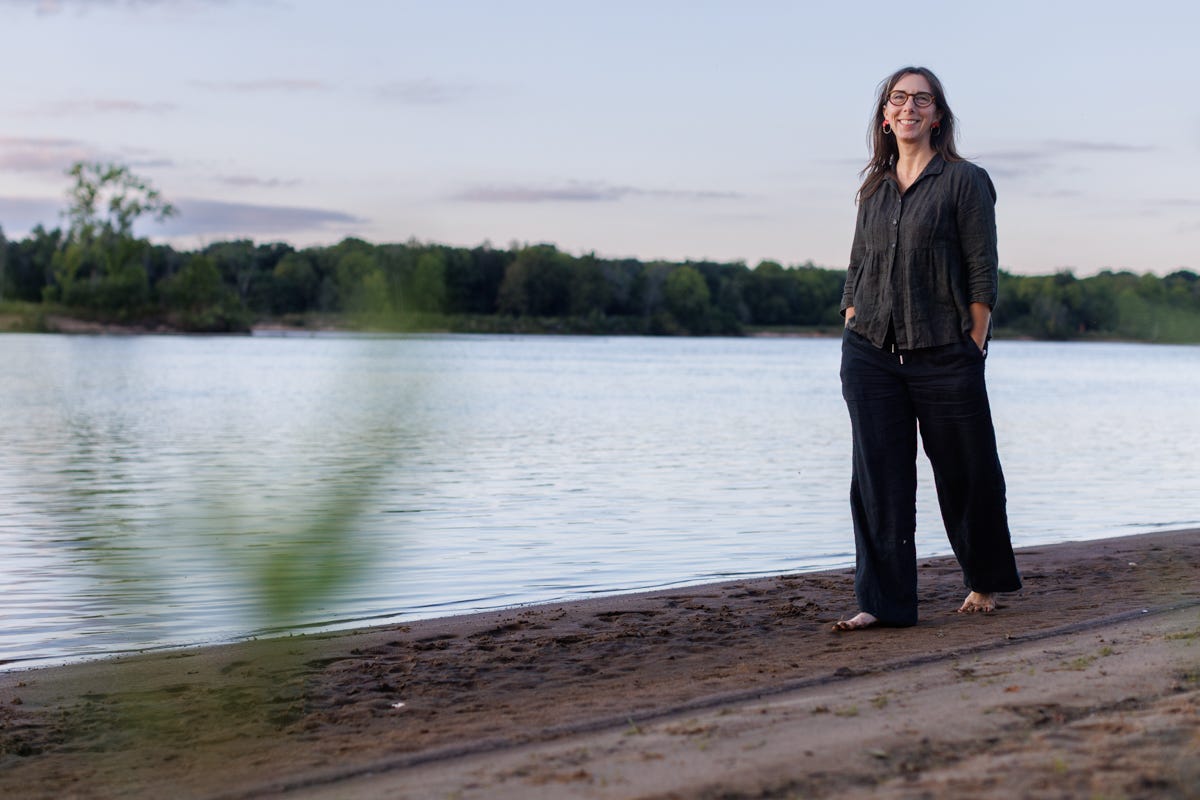
Dear friends and readers,
On Labor Day, I sat happily relaxing in my favorite shady nook of the backyard. Our big, orange cat lay across the table as I was writing, reminding me how to watch sunlight play on leaves, how to listen to the morning murmurs of insects, how to settle down.
I was feeling pretty lucky to be lazing around on a public holiday to honor working people in the United States. As many of you know, I was laid off due to DOGE cuts earlier this year. Since then, I’ve had the good fortune of joining 155-year-old nonprofit called Wisconsin Academy of Sciences, Arts & Letters as the newest Director of Letters and editor of Wisconsin People & Ideas magazine, the organization’s triannual publication.
The basement of my new office building is filled with publications going back to 1870! I am humbled and honored to join the thinkers and creatives who have kept at it all these years. Founded on an enduring belief in the power of ideas, creativity, and words to inspire people, it’s a great organization to join up with in 2025.
Thank you, readers and friends, for your support through these recent months!
Floating takes practice
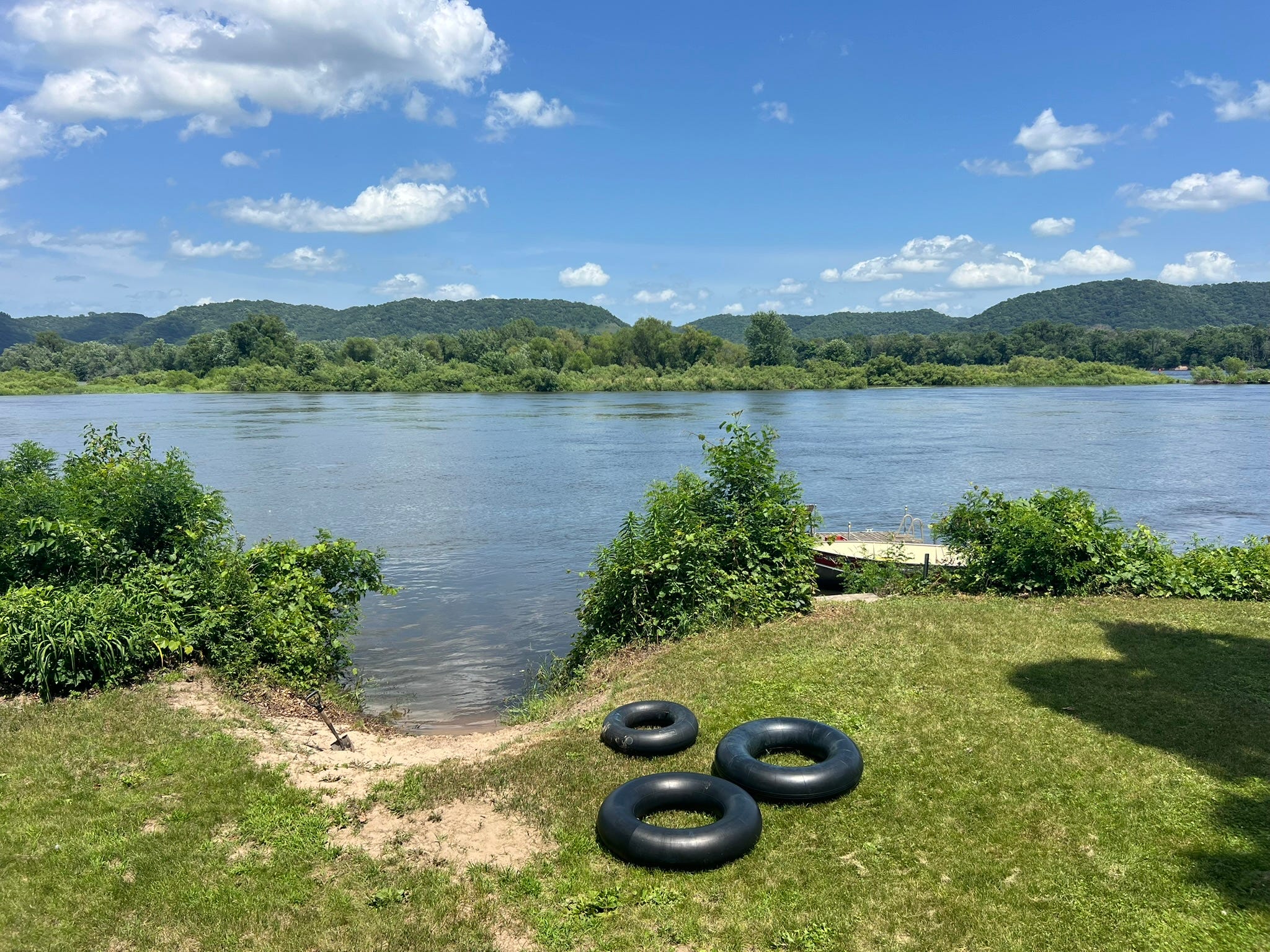
Anyone who knows me probably knows that the Wisconsin River is my favorite place on earth. It’s a gentle landscape. I can settle down there.
I sometimes wonder why I am drawn back, year after year, in every season. Some people are drawn to the ocean. Many people seek out lakes. What is it about rivers for me?
My ‘first’ river was the Olentangy, which ran along the edge of my neighborhood when I was a kid in Columbus, Ohio. The river passed through a large city park and past my high school, both named Whetstone. I didn’t know it at the time, but the name is apparently a shorthand settler term for what the Leni Lenape called that waterway. The riverbed was full of shale, a stone used for sharpening tools and weapons.
When I was eleven years old, and again when I was sixteen, we lived a block from the Leine River in Hannover, Germany. My ancestors, and many of my husband’s ancestors, all immigrated from Germany and settled in the Ohio River Valley around Cincinnati. In the summer, we gather at a family cabin along the Mississippi River. And many times a week, I walk a few blocks from my house to spend time along the Yahara River.
The Yahara is not a big, bold river like the Wisconsin or the Mississippi, but it is a critical and natural component of the watershed, connecting lakes and regulating the water table. The official internet history reads:
Before White settlement, when the Four Lakes region was home to Native Americans, the Yahara River meandered from Lake Mendota through marsh and swamps, across the isthmus to Lake Monona. In 1849 future governor Leonard J. Farwell dammed the Yahara where it flows out of Lake Mendota and in 1850-1851 built a five-story flour mill on the west bank. The Yahara, then called Catfish Creek, was at some point straightened - apparently by 1885.
Rivers are like the arteries of the planet, veins that are woven through history, fluid landscapes of life. I told my husband I’d been thinking about the rivers of my personal history and he reminded me of the "river man" character in Hermann Hesse's novel Siddhartha. The river is a symbol for life and time that offers a lesson in the unified, timeless nature of reality. “Vasudeva, the river man, really influenced me a lot,” he said, offering to dig his copy of Siddhartha out of the attic so that I could reread it.
We spend at least a week every year on the Wisconsin River. It’s our annual family retreat. A few days after we returned in August, I went for a Float. If you are not familiar, it’s a kind of relaxation therapy. It was my third time spending an hour in a personal pool of 1,000 pounds of Epsom salt and 10 inches of water. The idea is that it reduces fatigue, stress, and tension through calm and peaceful relaxation.
As I prepared to enter the pod, I read a sign I hadn’t noticed before. It said simply: Floating takes practice.
That hadn’t really occurred to me during my first two visits at the local Float center. I guess I assumed I knew how to just lay there. But that little bit of wisdom + instruction got me thinking:
Everything takes practice. Even relaxing.
Decades ago, when I first started practicing yoga, I came across a postcard with poetic instructions from Ilan Shamir entitled Advice from a tree. It said things like “Stand tall and proud. Go out on a limb. Remember your roots. Drink plenty of water. Be content with your natural beauty. Enjoy the view.”
So here I’ve written my own version about what I’ve been learning. Some advice from the rivers.
Advice from a river
Take your time.
Settle down.
Ebb.
Flow.
Expand.
Go deep.
Change course.
Create grooves.
Lighten up.
Reflect the beauty of the place.
Sooth. Calm. Nurture.
Wander.
Here’s a recording of Advice from a river:
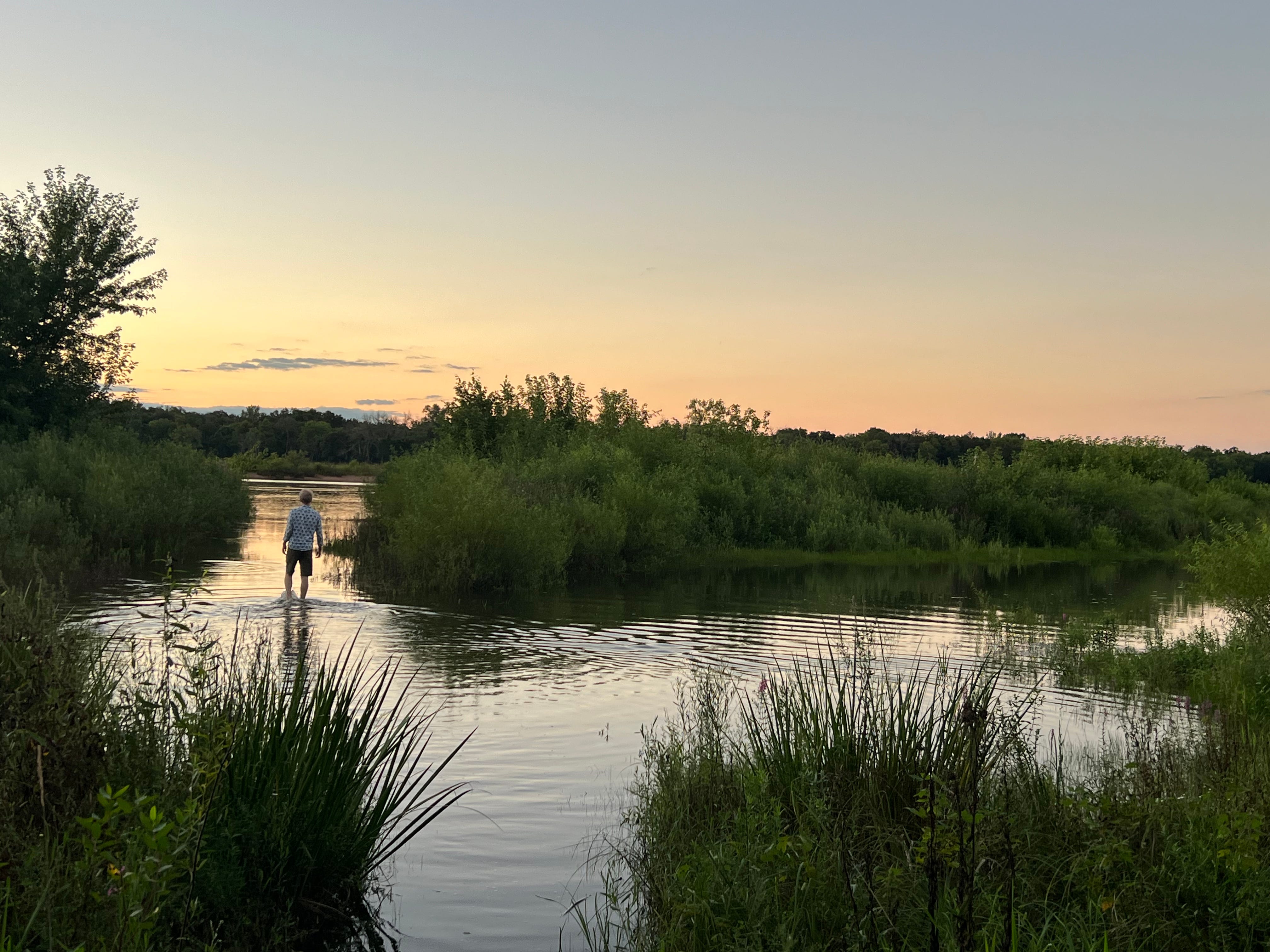
Thanks for wandering with me. I am grateful for this journey with you. Tell me, what have you learned from a river?
Sincerely,
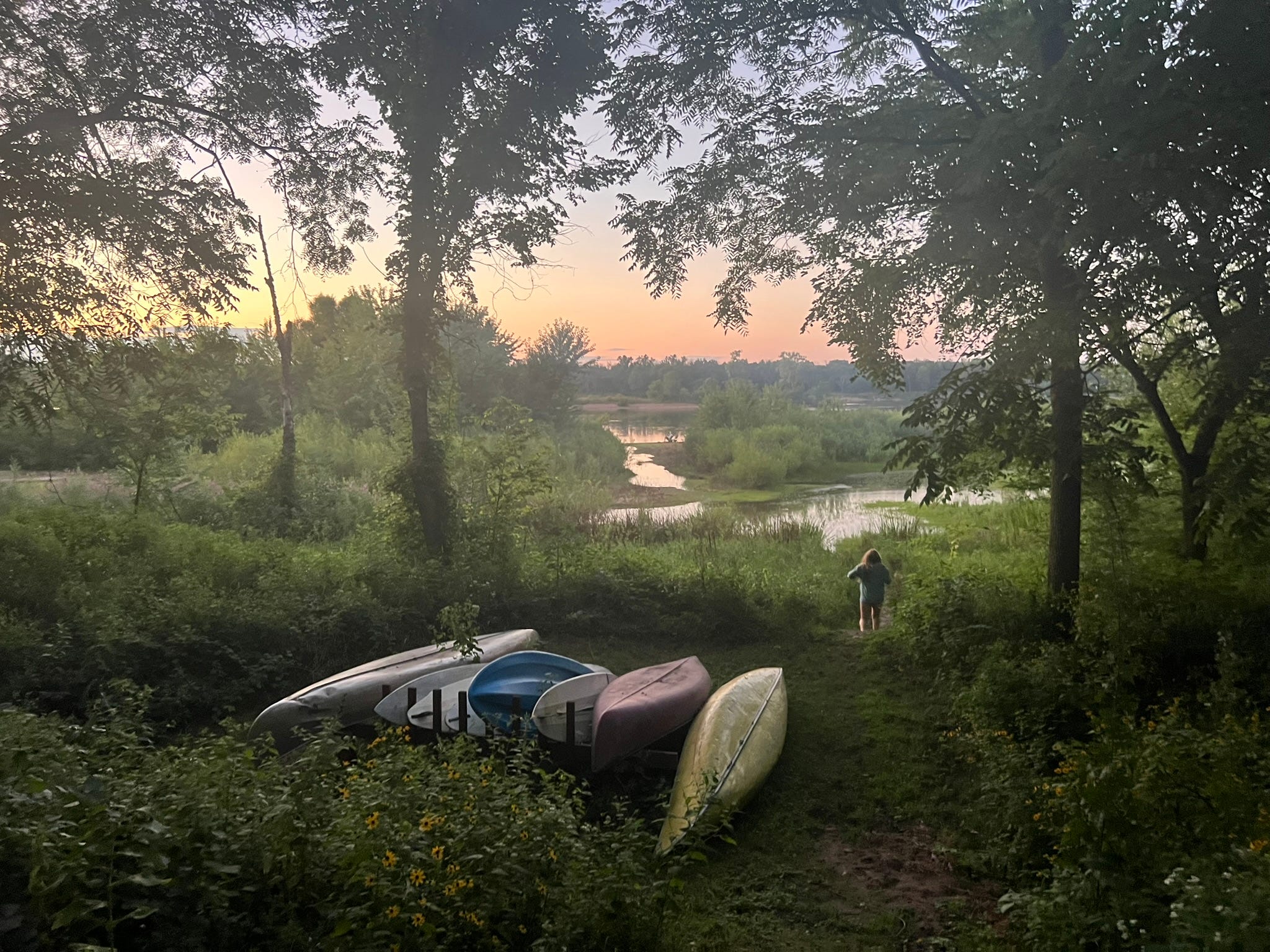
Read more about the Wisconsin River in an earlier post:
“I’ve been returning seasonally to this same spot on the map for more than two decades, like a bird loyal to her nesting grounds. I know this landscape of slow-water and shifting-sands like my own body. Like my body, it changes all the time.”

There is no reason to paddle
but every good reason to steer.
-From “On the Flanks of the River” by Andrew Franklin (1951-2021)
That last image - wow, beautiful photograph!
I am more of an ocean person :) but the advice from a river - wise words we all should heed.
Congrats Jessica! What great news!